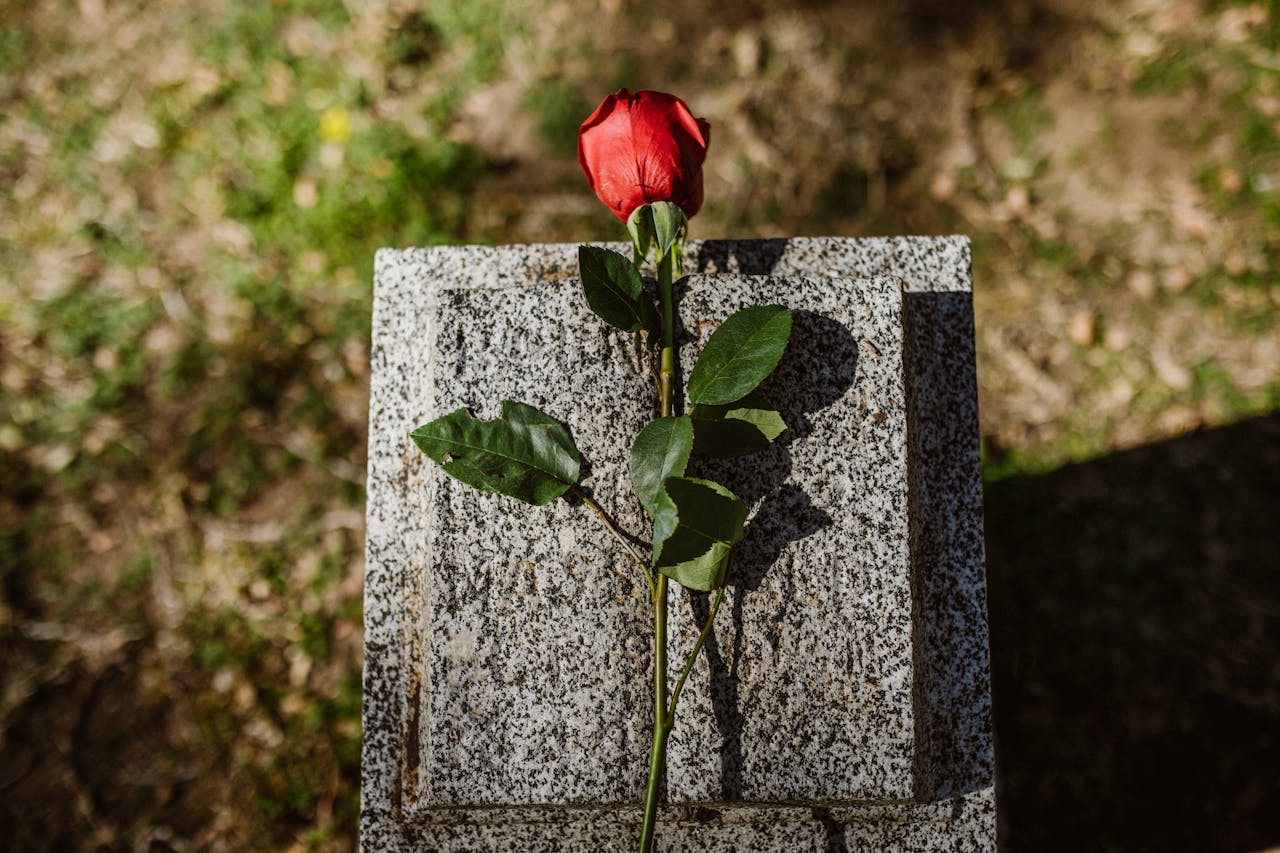
When we talk about funerals these days, much of the focus seems to be on cremation.
The full podcast is below.
Traditional cremation, direct cremation, what happens to the ashes afterwards and, of course, the cost.
But what about burial?
I sat down with Karen Acres recently to talk about it, and it became clear quite quickly that burial is not quite as simple as finding a nice cemetery and choosing a plot.
There is cost, availability, family tradition, faith and even where you live to think about. There is also a growing interest in natural burial, which brings a whole new set of choices.
And, as Karen kept coming back to, there is one thing which can make all of this much easier.
Planning it before somebody dies.
A place to go back to
Karen told me about a burial ground she came across while walking in Scotland.
It overlooked the Moray Firth. There was no church or large chapel, and none of the huge memorial stones you often see in old cemeteries. The headstones were small and simple. Benches had been placed around the grounds so people could sit quietly.
Karen loved it.
In fact, she found herself thinking that when her time came, she would be quite happy ending up somewhere like that.
There is something about burial that cremation does not always give you. It creates a physical place connected with that person.
For some families that matters a great deal.
For others, burial comes down to family tradition or faith. There may already be generations of one family buried in the same churchyard. There may even be an existing family grave waiting for another family member.
At least, that may be what everyone thinks.
The problem with assuming
One of the things that came out of our conversation was how often families make assumptions about funeral arrangements.
Mum always wanted to be buried with Dad.
Grandad bought a family plot years ago.
We’ve always used that churchyard.
The problem comes when somebody dies and the family discovers that what they thought would happen cannot happen.
Some cemeteries are now full.
Some churchyards cannot take further burials.
An existing family grave may no longer be suitable for another coffin because of the condition of the ground or problems gaining safe access to it.
In some cases, a full burial may no longer be possible, but the person’s ashes can still be placed into the existing family grave.
That may still give the family what they wanted, but it is much better to know about it beforehand than discover it while trying to arrange a funeral.
Karen sees this problem first-hand. Families sit down after somebody has died and she asks the obvious question:
“What did they want?”
Quite often, nobody knows.
Burial can be expensive
Then there is the cost.
Burial can cost far more than many people expect, particularly if you want to be buried outside the area where you live.
Karen gave the example of a burial plot costing around £3,000 for a local resident. The same plot for somebody from outside the area could cost £9,000.
That is quite a shock if the deceased had always said they wanted to be buried in a particular cemetery without checking what it would cost.
There is some logic behind the higher fees. Burial land is limited and local cemeteries need to keep space available for local residents.
But it does mean that simply liking a cemetery does not mean you can afford, or even have the right, to be buried there.
This is another reason why funeral wishes need a bit more thought than saying, “Stick me in the churchyard.”
The disappearing option of reserving a grave
Years ago, it was possible in many places to buy or reserve a burial plot long before it was needed.
That is becoming much harder.
Think about the problem from the cemetery’s point of view. Somebody reserves a plot today but may not need it for another 20 or 30 years. In the meantime, other burials take place around it.
Eventually, getting machinery and people back into that reserved plot can become difficult.
As a result, some cemeteries have stopped allowing plots to be reserved in advance.
There is another odd problem with old burial rights.
Karen has known people who bought a plot, later changed their mind and decided on cremation, then sold the burial rights back to the cemetery.
They received what they originally paid.
The cemetery then sold the plot again at today’s price.
I’ll leave you to decide who got the better end of that deal.
What on earth is a reclaimed grave?
This was one of the more interesting parts of our conversation.
Some cemeteries now offer reclaimed graves.
These are very old graves which may not have been visited or maintained for decades. The headstone may have disappeared or become unreadable.
Subject to the rules of the cemetery, the grave may eventually become available for another burial.
Karen told me these can sometimes cost around half the price of a new grave.
For some people, the idea will not appeal at all.
Others may think it is a sensible use of limited space.
Either way, it shows just how much pressure there now is on burial space in some parts of the country.
Then there is natural burial
Natural burial sounds lovely.
And in the right place, it can be.
Instead of rows of formal graves and large polished stones, you may have woodland, meadow, wildflowers and simple natural surroundings.
Karen has conducted a number of natural burials and loves the idea.
But she also pointed out that the picture in your head and the practical reality are not always the same thing.
Natural burial grounds often have strict rules. Coffins or caskets may need to use materials that break down naturally. Clothing may also need to meet certain rules. Plastic, leather and artificial flowers may not be allowed.
Traditional headstones are often banned.
Some grounds may allow a small wooden marker. Others allow nothing at all.
That creates an obvious question.
How do you find the grave again?
A beautiful wild meadow can become very wild indeed after a few years.
Karen has attended natural burials where even reaching the graveside has proved difficult. Long grass, nettles, thistles and uneven ground can present a real problem, particularly when older family members are trying to attend.
The hearse may also be unable to reach the grave.
Some sites use a hand cart to carry the coffin from the main track.
There is nothing wrong with any of this, but it is worth knowing what you are signing up for.
If you are considering natural burial, go and see the place.
Don’t just look at the photographs on the website.
The family grave you didn’t know you had
Perhaps one of the strangest situations Karen has encountered happens when a family finds burial documents after somebody has died.
The family may already have arranged a cremation, only to start clearing cupboards and drawers and discover paperwork showing that the deceased owned burial rights in a family grave.
Nobody knew.
Nobody had been told.
Sometimes it isn’t too late to change the arrangements.
But why create that problem in the first place?
If you own burial rights, tell your family.
Better still, put the paperwork somewhere they can actually find it.
It sounds obvious.
Much of this stuff does.
Until somebody dies.
You can still use a family grave after cremation
One useful point from Karen’s experience is that cremation does not always mean giving up the idea of being placed with other family members.
Even where a cemetery has closed to new full burials, it may still be possible to place ashes into an existing family grave.
For somebody who wants to be reunited with a husband, wife, parent or another family member, this can be a very good option.
Again, the key is knowing that the grave exists and understanding what rights the family has.
None of us likes planning this stuff
This is really the point.
Most of us would rather plan a holiday than a funeral.
Quite understandable.
But refusing to think about it doesn’t mean somebody won’t have to make the decisions.
It just means somebody else will make them later, probably while upset, tired and dealing with all the other jobs that arrive after a death.
They may be trying to work out what you wanted.
Burial or cremation?
Family grave or new grave?
Natural burial?
Where?
Religious service?
What happens to the ashes?
And somewhere among your paperwork there may be the answer.
Or there may not.
Karen’s advice at the end of our conversation was straightforward:
Plan, plan and plan.
I don’t think you need to plan every detail of your funeral.
But your family should at least know the broad outline.
If you want to be buried, tell them.
If there is a family grave, tell them where.
If you have bought burial rights, show somebody the paperwork.
If you fancy a natural burial overlooking somewhere beautiful, check that you can actually have one.
Because there is a considerable difference between leaving your family with your wishes and leaving them with a bloody great guessing game.
You can find out more about Karen Acres over at www.karenacres.co.uk.